- /
-
- Blog /
- LTO Host bus adapters - LTO part 2
LTO Host bus adapters - LTO part 2
Backups are costing me only 1.1 euro per 1TB (5 minutes read)
2025-09-14
Introduction
This is series of posts, open the lto tags above, or scroll down to 'Related articles' at the bottom for similar posts.
This specific post is about LSI controllers, connector and cables.
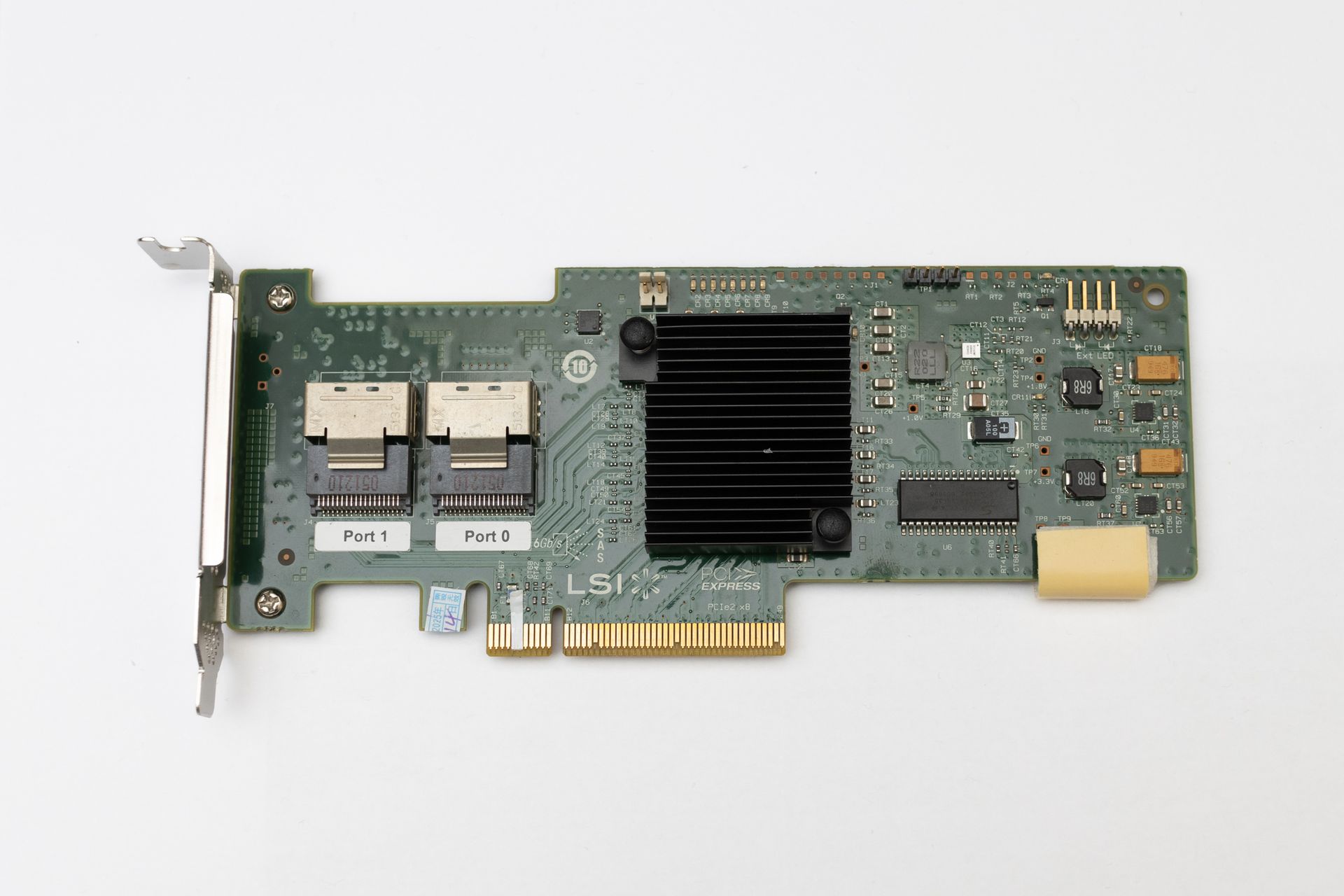
PCI-e LSI controllers
LSI controllers are a Host Bus Adapter (HBA) type of cards made by LSI logic, which is now owned by Broadcom.
When selecting a card, ensure it is in IT (Initiator Target) mode. IT mode exposes the devices directly to the OS and application, which is a requirement for LTO drives and ZFS-managed HDDs. Avoid IR (Integrated RAID) mode, as it manages devices at the hardware level and prevents the OS from seeing the raw device.
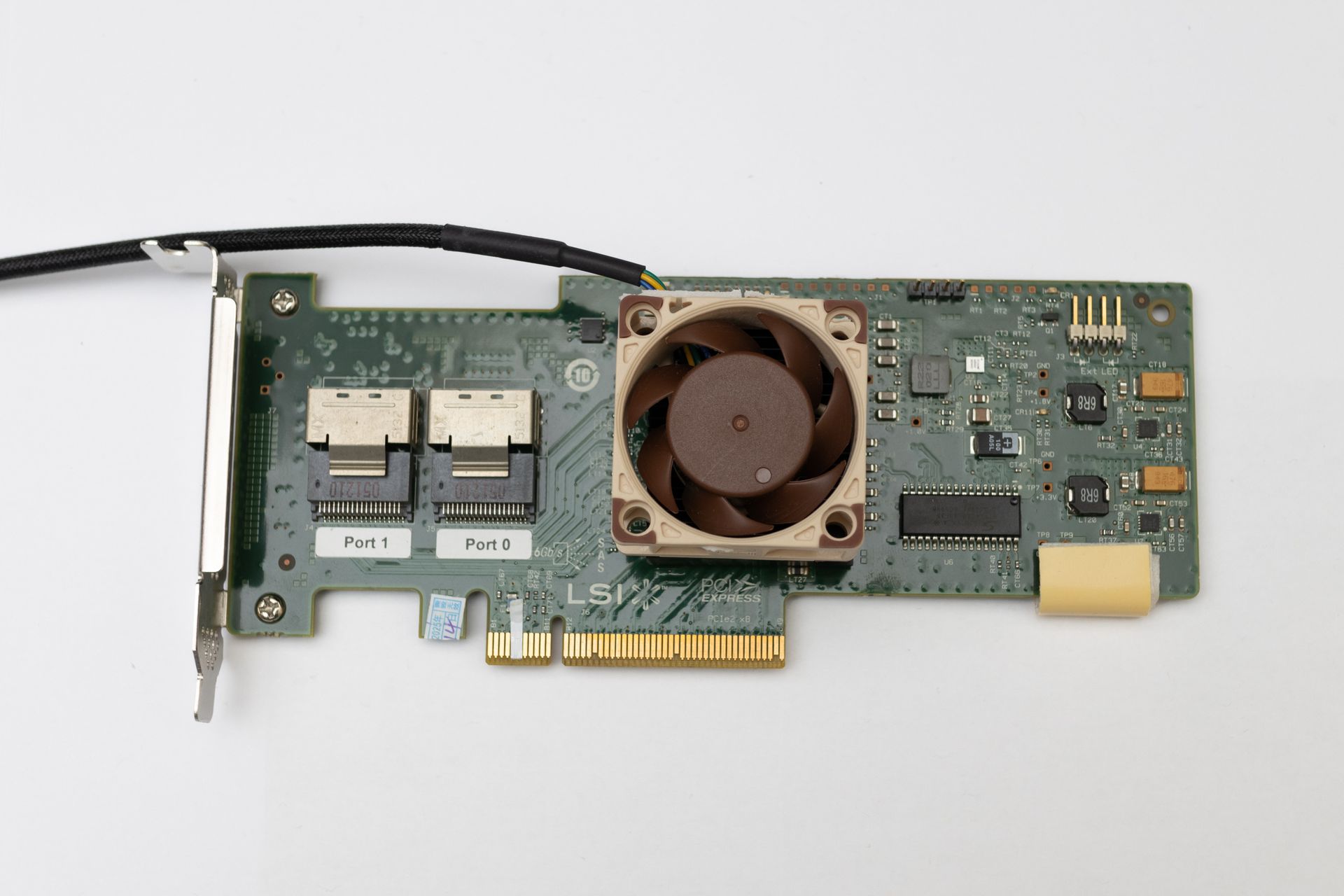
Because these boards are designed for enterprise rack hardware, they typically feature a passive heatsink and expect high-airflow in the chassis of a rack blade unit. In a home installation, you will likely need to add a fan. I recommend small Noctua fans: NF-A4x20-FLX, NF-A4x20-PWM, or for tight clearances the 10mm NF-A4x10-PWM. The difference between PWM and FLX Noctua fans is that PWM can be dynamically controlled, while FLX is fixed RPM speed, but can use inline cables to tweak this speed slightly.
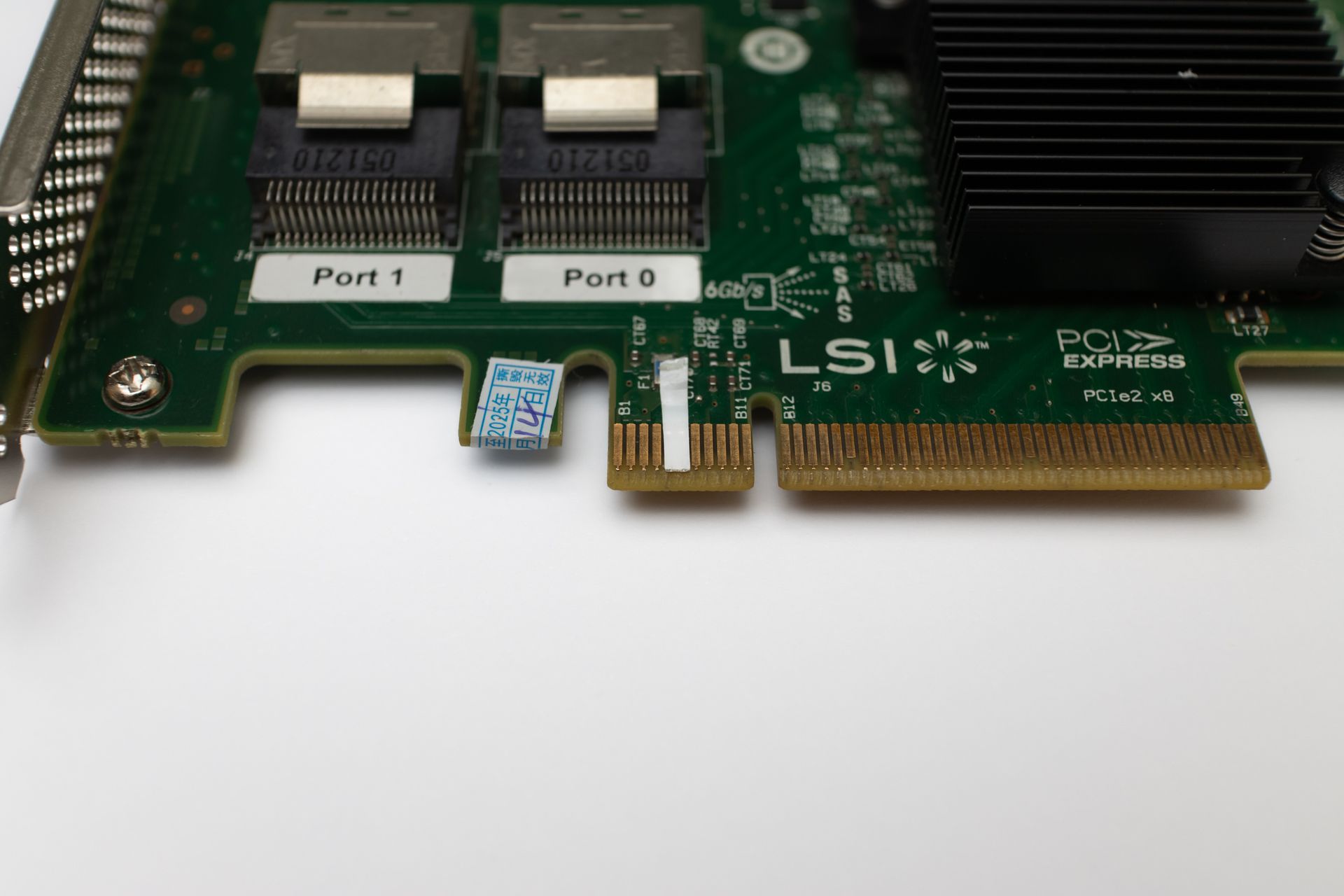
Hardware varies, some cards come with only low-profile brackets, while others include both standard and low-profile options. If the system fails to POST or boot then you might have older LSI board and two PCI Express pins might need to be blocked (or removed). It's the B5 and B6 pins (SMBus clock and data) and it's fairly common SMBus conflict issue, label maker sticker (or kapton tape) cut to small slice and covering these two pins works pretty fine and over the span of a year survive few motherboard swaps.
Naming convention
The card naming nomenclature might at first look cryptic such as: LSI SAS9217-4i4e and LSI 9240-8i, but to me the important part is the postfix. A -8i postfix indicates all ports are internal, while a -4i4e card provides four internal and four external lanes.
Other HBAs
I have grown to be very found of Jmicron JMB585 m.2 form factor HBAs from IOCREST and over few years of daily use they work well. They are not performing as fast as LSI SAS 9211-8i, but for LTO uses it doesn't matter.
For example: IOCREST M.2 HBA has SFF-8087 as the SAS-2 LSI boards which can be converted to SFF-8088 to drive LTO drive or with different cable used to drive 4 regular SATA drives.
External connectors and generations
However, these external connectors can be different types depending on the SAS generation
| Generation | Speed per lane | External connector | Note |
|---|---|---|---|
| SAS-1 | 3Gbit/s | SFF-8470 (Infiniband) | Not compatible with SATA drives |
| SAS-2 | 6Gbit/s | SFF-8088 (Mini-SAS External) | My preference for LTO |
| SAS-3 | 12Gbit/s | SFF-8644 (Mini-SAS HD External) | Might be unnecessary for LTO |
| SAS-4 | 24Gbit/s | SFF-8644 (Mini-SAS HD External), SFF-1016 (SlimSAS) or SFF-1024 (Mini-CoolEdge / PCIe) | Looks way out of home lab league |
The SAS-2 makes the most sense to me, 4 lanes together are 3GB/s (24Gbit/s), while the newest revisions of LTO do not even reach 0.5GB/s. And if needed, I can drive 4 SATA drives with it as well.
Yet it's not always requirement to stick within the same generation, for example an SFF-8088 tape drive (SAS2) could be driven from newer SAS3 card with an 'SFF-8644 to Mini SAS SFF-8088' converter cable. But that would be worth it only if the controller is not dedicated to LTO tapes and will be driving other things like JBOD.
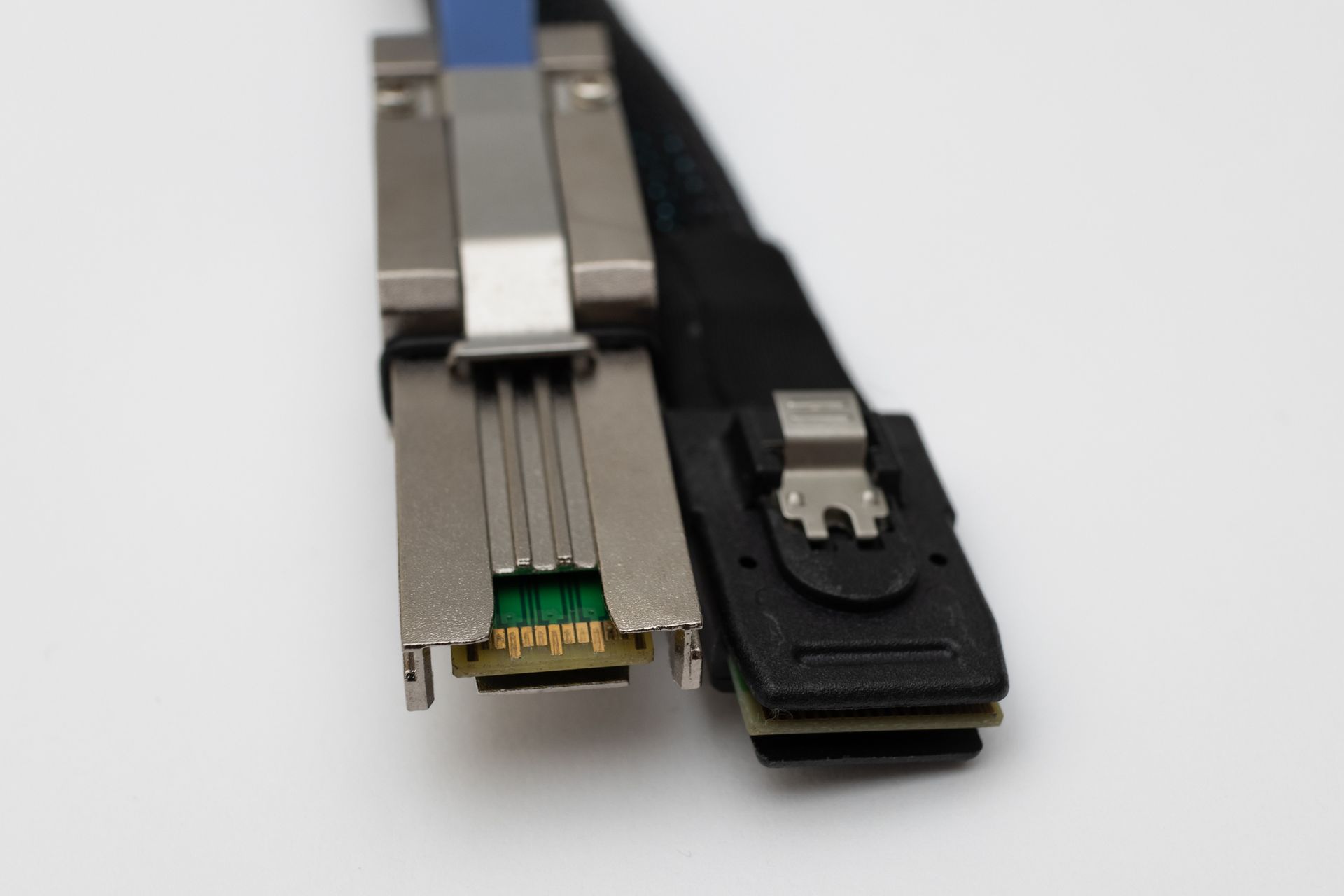
While the external connector for SAS-2 is SFF-8088 (on the left) the internal connector is SFF-8087 (on the right):
Cables and brackets
My LTO6 tape drive is using the SFF-8088, therefore I got an SFF-8088 male-to-male cable for it.
If you use a card with internal connectors only -8i like this one:
Then you will need an 'SFF-8087 to SFF-8088 adapter bracket' with an embedded SFF-8087 cable:
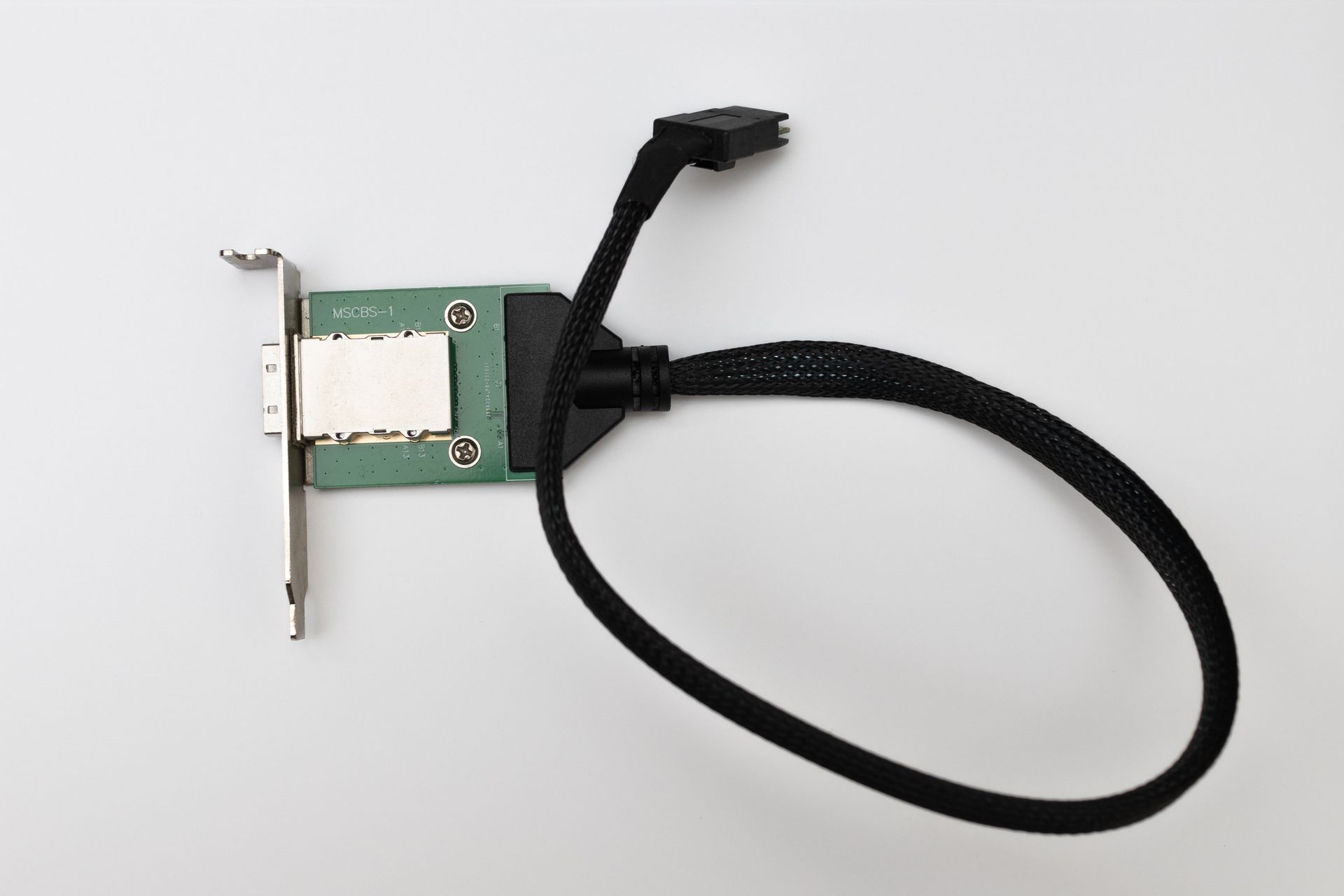
Or just bracket with SFF-8088 and SFF-8087 connectors:
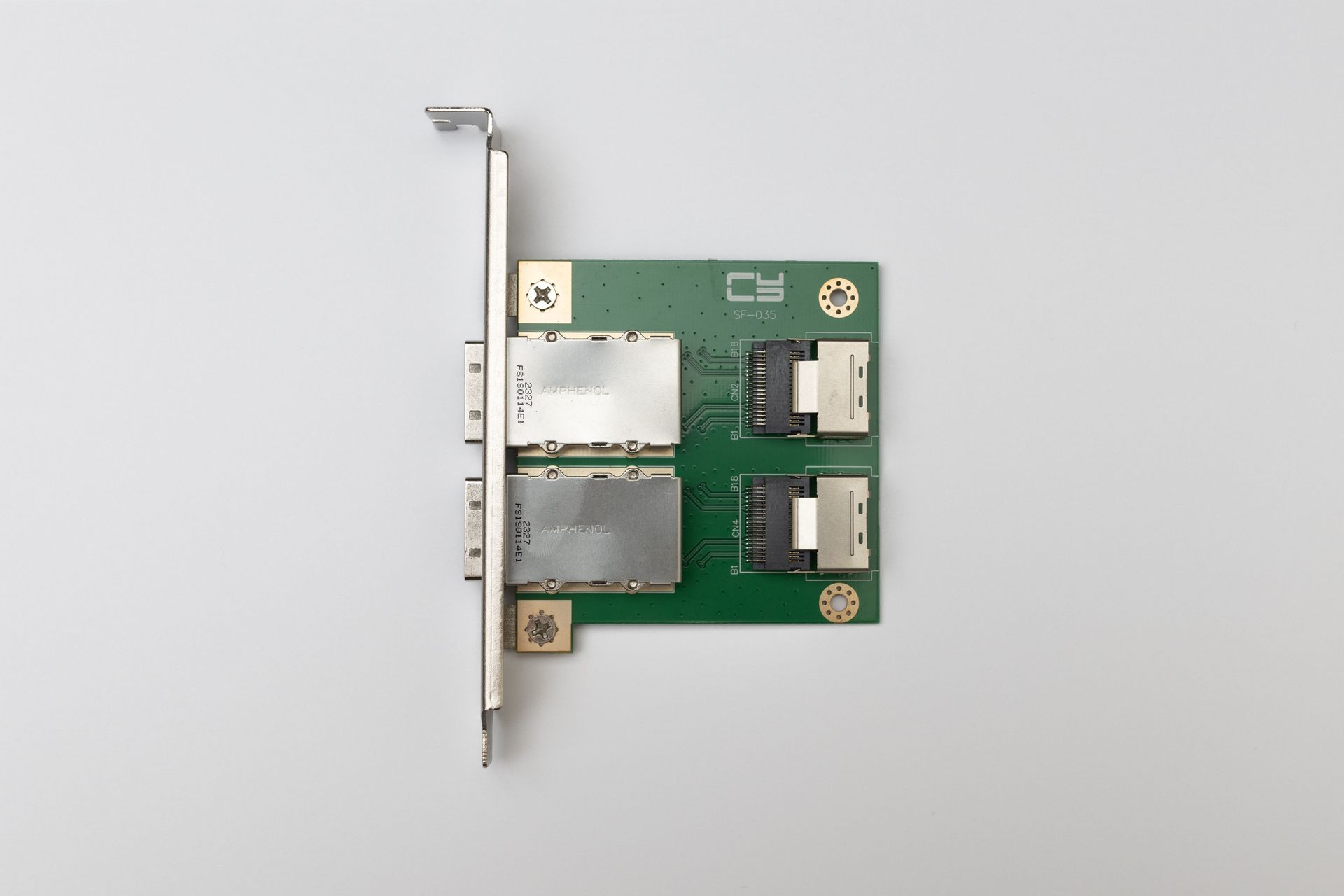
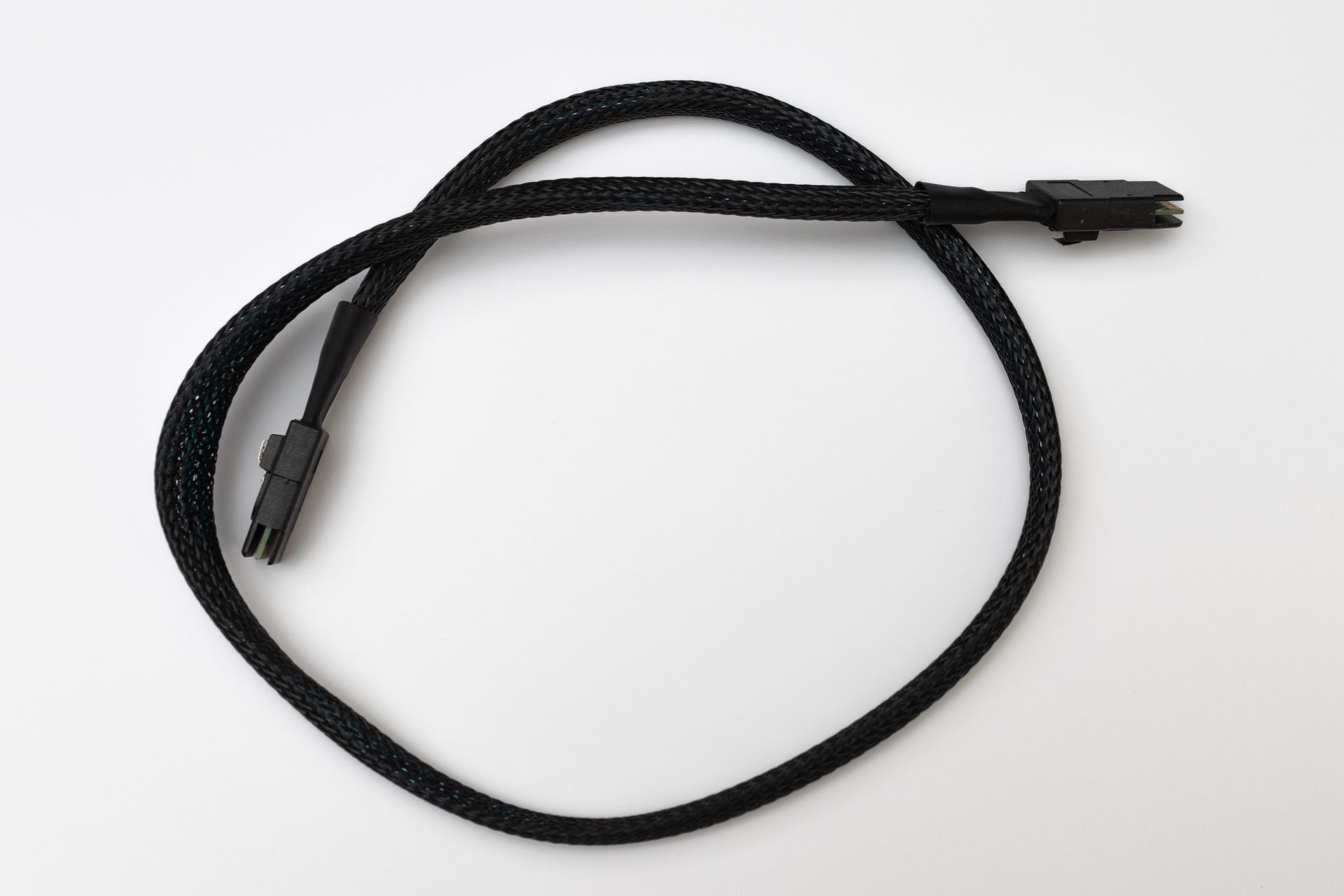
Then connect it to your LSI board with a separate internal SFF-8087 cable:
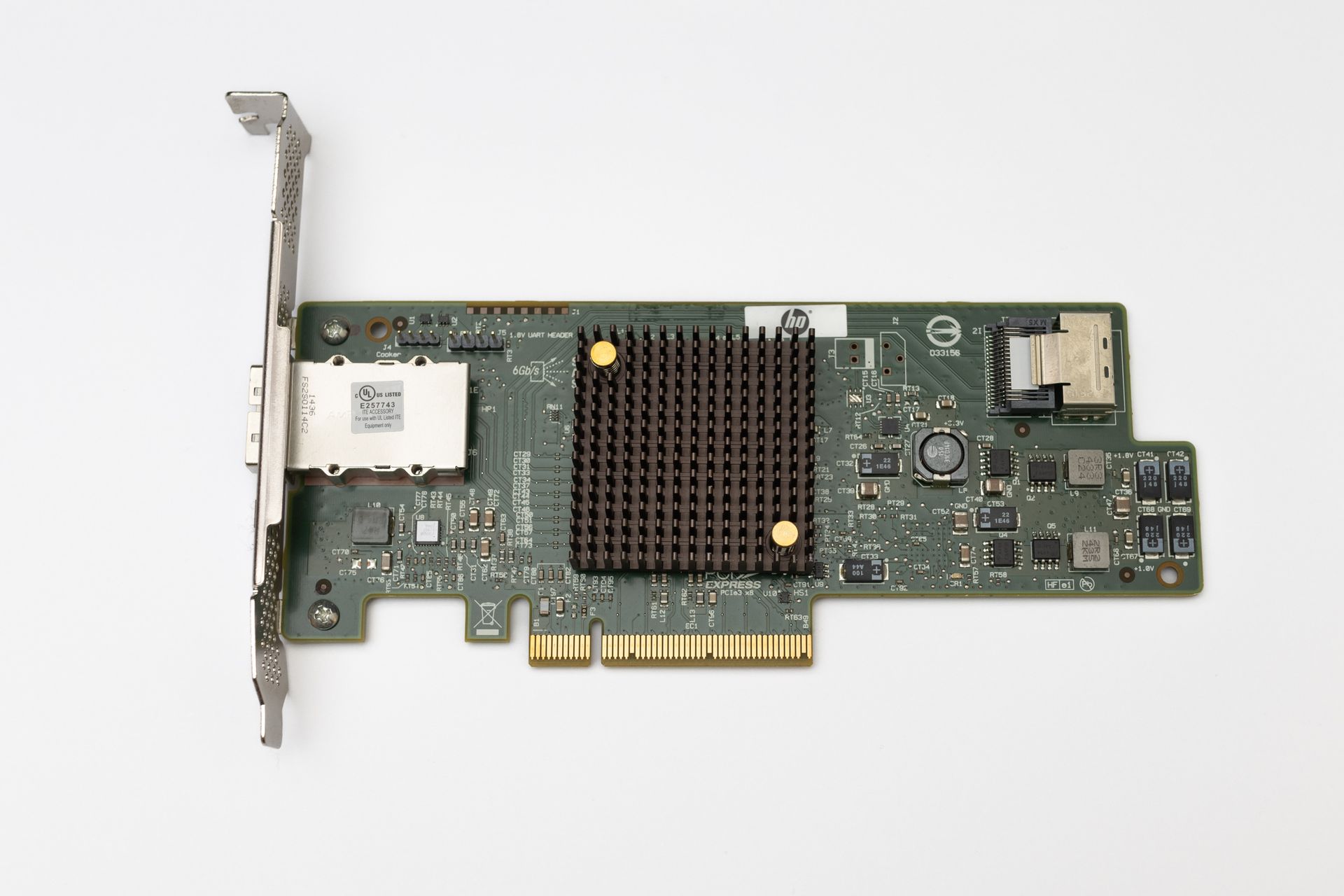
To avoid the extra cost and complexity of adapters, the most straightforward path is to purchase a card with SFF-8088 external ports, such as a -4i4e:
Or a -8e model to not worry about adapters and brackets (just be careful to get SFF-8088 and not other types of connectors):
Avoid even considering something like USB-C to SFF-8088 converters, even if something like that could be available at some point (maybe on AliExpress). These are unlikely to be reliable. A dedicated PCI Express LSI board will likely be the only proper way to do this if we like it or not. For laptop users maybe there could be a USB-C thunderbolt to PCIe adapter and then having an LSI card in it externally? Or maybe using different M.2 form factor HBA adapter and maybe using dremel to cut holes in the laptop. For myself it was simpler to purchase used mini PC ThinkCenter M920s which was able to hold the LSI card (after I dremel-ed small part of case away to hold such long card) and an 2.5Gbps Ethernet card.
References
- LTO Linear Tape-Open wiki
- WORM write-once read-many
- SAS Serial Attached SCSI wiki
- JBOD Just bunch of drives
- LTO-CM cartridge memory
- LTFS Linear Tape File System
- mbuffer man page
- mt man page
- LSI logic
- HBA host bus adapter